
Would Orville Wright Drill Offshore?

Posted by anne on 23 Jul 2008 | Tagged as: Maryland, Mike Tidwell, Solutions, renewable energy

See below for an Op-Ed published today in the Baltimore Sun by CCAN Director Mike Tidwell. Enjoy.

Let’s make history again

By Mike Tidwell
July 23, 2008
Baltimore Sun

I recently stood on the windy coast of North Carolina where Orville and Wilbur Wright made their maiden flight in 1903. That motorized glider, constructed with bicycle parts, lifted off and flew nearly 900 feet in 59 seconds. Americans, astonishingly, were walking on the moon 66 years later.

The miracle of U.S. air and space travel, achieved in an eye blink, is something we should keep in mind as we once again turn to our coastlines for answers. The same windy Atlantic shore that gave rise to human flight now offers a new fork in the road with two profoundly different technological and moral visions awaiting our national decision.

One vision involves turning thousands of miles of our shoreline - on both coasts - into new havens for oil drilling. Never mind rapid global warming. Never mind our reckless addiction to oil. Never mind federal government data showing it would do little for gas prices. The new drumbeat, even among many Democrats, is, “We gotta get more - offshore, onshore, wherever.”

That’s certainly one vision for our coastlines for the 21st century.

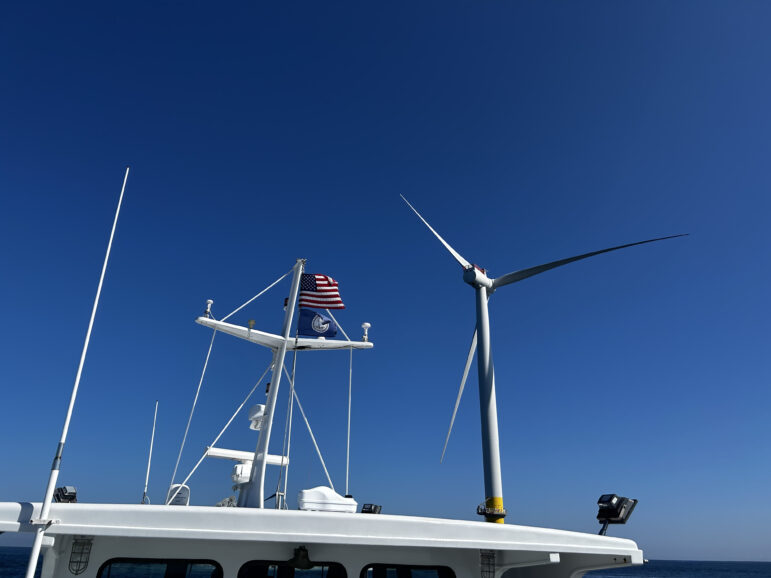
Thankfully, there’s another, entirely different, vision out there. It embraces the pioneering spirit of the Wright brothers. It promises positive, transformative, sky’s-the-limit change. It’s a vision that says: Let’s build along our coastlines, but instead of oil platforms, let’s put up wind farms. And let’s tap the power of ocean waves and ocean tides for energy, rather than climate-wrecking crude oil. In the process, let’s make history so that schoolchildren remember 2008 they way they now remember 1903. Continue Reading »

Share and Enjoy: These icons link to social bookmarking sites where readers can share and discover new web pages.
  • Digg
  • del.icio.us
  • StumbleUpon
  • Technorati
  • YahooMyWeb

Virginia is Itching for a PowerShift

Posted by tom on 23 Jul 2008 | Tagged as: Coal, Virginia, renewable energy, students

So take Virginia, the old Commonwealth, the birthplace of some of the most esteemed leaders of American history: Thomas Jefferson, James Madison, and television’s the Waltons.  Where are Virginia’s leaders now?  On today’s political front, you have politicians such as potential VP candidate Governor Tim Kaine, a strong outspoken proponent of a new waste coal plant in Wise County Virginia and a dismal goal of 7% green house gas reductions by 2025.  This is not even in the ball park of where scientists says we need to be.  If that wasn’t enough, you have Rick Boucher in Virginia’s fightin’ 9th and one of Congress’s biggest champions of so called Clean Coal and the myth buster Carbon Capture and Sequestration technology.  Granted there are some potential Clean Energy champions in the mix, but they need the loud uncompromising voice of the people in their ear demanding a clean and just energy future.

There’s an old story about Franklin D. Roosevelt that captures how the movement needs to think in terms of responsive leadership.  A group of activists met with FDR in the Oval Office to urge his support for some liberal reform. After listening to their arguments, Roosevelt responded, “Okay, you’ve convinced me.  Now go out and put pressure on me”

His point: Even a president can’t always act with ideal freedom.  He too faces constraints–powerful leaders in Congress, bureaucratic resistance and inertia, opposition from state and local government leaders, potential roadblocks in the courts, and so on.  Sometimes a president needs “pressure” in the form of a visible, well-organized, vocal, and articulate public movement to provide him with both political cover and supportive energy that permits him to do what he really wants to do anyways.

Student leaders from across Virginia are calling for exactly that, a PowerShift this October 10th - 12th at Virginia Tech.  Noticing that the politicians of the Old Dominion aren’t quite where they need it to be, the youth of today are excited, driven, and frankly a little pissed at the prospects being put on the table for their future.  You saw it when they blockaded themselves to Dominion’s headquarters in calls of desperation and solidarity from a generation that will bear the load of a coal filled economy.  Now they’ll show it with the largest mobilization of young people (apart from the Civil War) in Virginia’s history.

The plan:

1) Bring 1000 students from across the Commonwealth to Virginia Tech to be and hold the largest state summit on clean energy and youth activism.  We need to be a LOT louder and where better to start then the cradle of coal country.

2) Get trained and inspired to take this movement on as our own for the taking.

3) Influence the major media:  The Society of Environmental Journalists will be holding their annual conference three days after Virginia PowerShift.  We will make sure they know what was accomplished!

Check out www.vapowershift.org and get more plugged in. There is a need for speakers, trainers, sponsors and great minds who can help make thing a reality.

Share and Enjoy: These icons link to social bookmarking sites where readers can share and discover new web pages.
  • Digg
  • del.icio.us
  • StumbleUpon
  • Technorati
  • YahooMyWeb

Amory Lovins sounds off on the economics of energy

Posted by holly on 22 Jul 2008 | Tagged as: National Happenings, Nuclear Energy, Solutions, renewable energy

In the past few weeks, Amory Lovins, the co-founder, chairman and chief scientist of Rocky Mountain Institute in Colorado, who has been described as “one of the Western world’s most influential energy thinkers,” was all over the airwaves, talking about the rapid switch to renewable energy that will be necessary in the next few years, if we are to effectively combat the climate crisis. 

Amory Lovins, courtesy of Democracy Now!

Check out his interview on Democracy Now, where he discusses the true climate cost of investment in nuclear energy with Amy Goodman.

“What nuclear would do is displace coal, our most abundant domestic fuel. And this sounds good for climate, but actually, expanding nuclear makes climate change worse, for a very simple reason. Nuclear is incredibly expensive.”

He was also recently interviewed by Charlie Rose, and talks about economic investments in energy - and drilling for new oil is way at the bottom of the list, unlike investment in solar, wind, and other renewable resources.

Share and Enjoy: These icons link to social bookmarking sites where readers can share and discover new web pages.
  • Digg
  • del.icio.us
  • StumbleUpon
  • Technorati
  • YahooMyWeb

Public Comment on Nuclear Power - opportunities coming soon!

Posted by holly on 21 Jul 2008 | Tagged as: Maryland, Nuclear Energy, personal action

Constellation Energy wants to build the first new nuclear reactor in recent memory right here in Maryland. This makes me uncomfortable due to concerns with waste management and costs – but mostly because I would much rather see those billions of dollars invested in true climate solutions. The Maryland General Assembly even passed legislation this past year calling for increased investment in energy efficiency and renewable energy sources, and I would love to see these initiatives fast-tracked, instead of the fast-tracking of a new reactor at Calvert Cliffs.

Fortunately, there are some hoops that Constellation Energy has to jump through in order to get approval for building this new reactor. And there are ways for concerned Marylanders to get involved.

The Maryland Public Service Commission (that group of people that deals with electricity distribution, among other things) will be holding a series of three hearings for public comment in August. (full schedule of public and expert hearings can be found here)

But there’s a minor problem. All three of the meetings are held in exactly the same location in Solomons, a town in Southern Calvert County. This is great in that it allows plenty of opportunities for folks who will live in the shadow of the new reactor to give their comments – but what about the citizens in the rest of Maryland? As a resident of Silver Spring, I may not be directly affected if there’s an accident on-site; but Constellation is saying this reactor is necessary to prevent rolling brownouts across the state – so shouldn’t I have a say in whether or not I want my additional electricity to come from nuclear or truly renewable, more carbon-neutral sources? In addition, matters of transporting and storing the nuclear waste will affect all Marylanders.

Therefore, the Chesapeake Safe Energy Coalition is holding an additional public meeting in Baltimore. Here are the details:

Time: August 12th 6:30pm – 8:00pm

Location: Enoch Pratt Free Library in Baltimore.

What’s Happening? We’ll be collecting public comments to submit to the PSC, and giving everyone a chance to state their opinion on the plant, whether you support nuclear power, or share my concerns, or have other concerns that you want included in the public record.

RSVP today – and tell your friends!

By the way, we aren’t completely boycotting the PSC either. We’re going to have a concentrated showing of opposition to the plant at the first public meeting, on August 4th. It’s being held at the Holiday Inn Select, 155 Holiday Drive, Solomons, Maryland, and begins at 7 PM. So if you’re gung-ho about speaking directly to the PSC, or are from Southern MD and are concerned about the plant, come on down! To RSVP, click here.

If you’re confused about the link between climate and nuclear power, check out this earlier blog.

And for everything you’ve ever wanted to know about nuclear power, check out the Chesapeake Safe Energy Coalition factsheet page.

Share and Enjoy: These icons link to social bookmarking sites where readers can share and discover new web pages.
  • Digg
  • del.icio.us
  • StumbleUpon
  • Technorati
  • YahooMyWeb

The Goracle redefines climate leadership

Posted by Keith on 18 Jul 2008 | Tagged as: Al Gore, Grassroots Climate Action, Solutions, Washington, DC, renewable energy

Image by Chris Eichler

Al Gore may have lost the 2000 presidential election, but as the speech that he delivered Thursday to a packed house at the DAR center in DC indicates, he has definitely beaten his old rival George W. Bush when it comes to being presidential.

While most bloggers and commentators out there were quick to start parsing all the nitty-gritty particulars of Al’s speech yesterday, I would venture that the majority of them – from the Gore lovers to the Gore haters and everyone in between – ended up missing the forest for the trees. The real thrust of Gore’s speech, what gave its unique power, wasn’t the numbers, the timelines or the targets that he laid out, it was its boldness – its capacity to cut through the ideological and political morass, and yes, the truly uninspiring obsession over targets and timelines that characterizes climate politics. By challenging America to the monumentally ambitious task of producing all of its electric energy from renewable sources in 10 years time, Gore did something much more than set a policy goal; he set out a vision that is sufficiently compelling to rouse Americans out of their climate complacency and into action.

Gore best described the practical need for such boldness himself when he said:

“A political promise to do something 40 years from now is universally ignored because everyone knows that it’s meaningless…Ten years is about the maximum time that we as a nation can hold a steady aim and hit our target.”

Through this statement, and many others Gore made throughout his speech, he identified a critical ingredient of success that most efforts to address climate change have been lacking – real visionary ambition. The climate crisis is a monumental problem, and we’re not going to solve it by obsessing over policy approaches, or scientific facts or figures, or the political or economic feasibility of particular reduction goals or timelines. Such details are critical, but they don’t inspire popular or political movements on the scale that we require to fight the climate crisis. Monumental, inspiring ideas do – ideas that tap into our sense of national pride and excite our ingenuity - ideas like putting a man on the moon, or making a gigantic leap from the carbon age to the renewable age in a mere 10 years.

By issuing such a monumental challenge, Al Gore offered us something else that has been in short supply at the federal and state level on the climate issue: true leadership. He reminded us that a leader isn’t someone who happened to win an election, but someone who can actually articulate a vision to inspire us to attain what many might deem impossible – i.e. someone who actually leads. It’s a definition of leadership that’s been forgotten by too many of our politicians from President Bush with his eight years of climate foot-dragging, to Tim Kaine who can’t a envision a future without coal, to the congressional reps who think an oil company boondoggle is the solution to our pain at the pump. With leaders like that we never would have gotten to the moon, and with leaders like that we’ll never solve the climate crisis.

That’s why it’s absolutely critical that in this election year, that we remind our elected leaders that leadership isn’t a prize but prerequisite of election, and that we remember that definition ourselves when we head to the polls.

Share and Enjoy: These icons link to social bookmarking sites where readers can share and discover new web pages.
  • Digg
  • del.icio.us
  • StumbleUpon
  • Technorati
  • YahooMyWeb

Coal is what it is–VP candidates and coal

Posted by susanna on 15 Jul 2008 | Tagged as: Coal, Virginia

In an interview with Rolling Stone, Barack Obama shone some of his rays of hope on the climate movement. He named “serious” action on global warming as one of the benchmarks for success in his first term. “If I haven’t gotten combat troops out of Iraq, passed universal health care and created a new energy policy that speaks to our dependence on foreign oil and deals seriously with global warming, then we’ve missed the boat.”

In order to deal “seriously” with climate change, we need a moratorium on new coal plants. According to James Hansen, “it’s just silly to build a new one now.” And yet VP hopeful, our own Governor Tim Kaine, aggressively pushed for his and Dominion’s coal plant in Wise County. As Gov. Kaine says on this video, “There are some who say that you can’t build any new coal plants, and I don’t agree with that.”


Join the campaign at www.chesapeakeclimate.org/nocoal

Another VP hopeful, Kathleen Sebelius, has a record on coal that is much more promising than Gov. Kaine’s. She made herself a hero by standing up to a Republican legislature and strong utilities by blocking a coal plant from being built. Even the Republicans have a strong hero in the VP running. Florida Governor Charlie Crist successfully halted the construction of a new coal plant and stated his strong support of renewable energy. “Coal is what it is and I know it’s been an important source of energy in the past. But you know we have solar, we have nuclear, we have wind and other alternative opportunities for energy in the Sunshine State.”

It’s obvious that Kaine supports coal. He wants coal now, and he wants coal in the future. Is this going to meet up with Obama’s stated goal, to seriously address global warming?

Share and Enjoy: These icons link to social bookmarking sites where readers can share and discover new web pages.
  • Digg
  • del.icio.us
  • StumbleUpon
  • Technorati
  • YahooMyWeb

Sneak Preview of the Maryland Climate Action Plan

Posted by Keith on 11 Jul 2008 | Tagged as: Chesapeake Bay, Effects of Global Warming, Maryland

Exciting news for Maryland climate action aficionados! A plenary session of the Maryland Commission on Climate Change convened in Baltimore today for a final discussion and review of their hotly anticipated Climate Action Plan, and I had a front row seat to all the action. The Plan is officially scheduled for public release on June 25th, so mark your calendars and prepare a nice cozy spot to kick back and enjoy what is sure to be a truly climatolicious read.

Though access to advance copies of the report has been restricted thus far to Commission members and government officials, the Commissioners did drop a few tantalizing hints as to its content. According to commissioner George “Tad” Aburn, the real meat of the report is contained in Chapter 2 - a comprehensive assessment of climate change in MD - Chapter 4 on carbon reduction strategies and Chapter 5 on adaptation strategies. Most of the content is sure to be on the wonky side, but for those of you who’d prefer a more publicly accessible version, fear not, there’s an executive summary for the uninitiated. Indeed, the report contains something for climate watchers of all stripes. Of particular interest to the CCAN community is the Chapter entitled Next Steps which discusses work that will need to be done in coming months to turn the report’s stellar recommendations into stellar public policy. To that end, the Commissioners will be meeting informally with environmental, labor, and industrial interests over the next few months to start hammering out a policy road map that everyone can live with. A more formal stakeholder process will follow in September, and the Commission will also sit down with Governor O’Malley sometime before summer’s end.

At the end of what turned out to be the shortest meeting in the Commission’s history the commissioners formally ratified the new report by unanimous vote. If the report ends up bearing legislative fruit, it would undoubtedly propel Maryland to the head of the learning curve on the national climate action front by putting the state on a path to an spectacularly ambitious 50 percent reduction in CO2 emissions by 2020, and 90 percent by 2050. Such bold action would be particularly apropos for a state that is so vulnerable to climate change, and would set a fantastic example for other states and our foot-dragging federal neighbors to follow. So lets make sure that our legislators get on the ball this year and heed the recommendations of the Commission. The rewards of action will be a boon to Maryland and the country at large; the cost of inaction could be unthinkable.

Just how unthinkable? Log on to the Commission’s website on the 25th and download your personal copy of the report to find out.

Share and Enjoy: These icons link to social bookmarking sites where readers can share and discover new web pages.
  • Digg
  • del.icio.us
  • StumbleUpon
  • Technorati
  • YahooMyWeb

Dominion Power vs. Basic Economics

Posted by Paul on 10 Jul 2008 | Tagged as: Coal, Virginia

The Associated Press reported the other day that the price of coal has gone through the roof from $40 to $90 per ton in just the last year. The causes of this increase are many, from short term problems (like floods in major Australian mines), emerging competition for the resource from China and India, and long term problems having to do with increased demand. The take home message is that coal is getting more expensive, and that is causing the electricty providers to raise rates.

Therefore, it should come as no surprise that the states and utilities that rely most heavily on coal are being the hardest hit by this growing energy boondoggle. States like West Virginia that get more than 90% of their energy from coal saw their electricity rates rise twice as fast as the national average in 2007 (4.6% vs. 2.3%). Rate increases like these impact the already stressed poor communities the most, the ones that are barely able to pay their utility bills in the first place.

To many of us that understand basic economics, the price increases that we are currently seeing with coal, gas and oil are not entirely surprising. All fossil fuels are fininte resources that are used and not replaced. As the world uses more and more of these resources, the scarcer and more valuable they become, and therefore the price goes up accordingly.

This is not wholly a bad thing if the economy is allowed to work its magic. Other forms of (renewable) energy will become more competitive, our reliance on fossil fuels will go down as we use more alternative energies to meet our needs, and as demand for fossil fuels drops so will the price. Pure magic.

But our utilities are not listening to the market and apparently are not big fans of Adam Smith.

In spite of fact that we are running out of coal and prices are skyrocketing, Dominion Power still wants to build a new coal plant to lock Virginians into 50 more years of dirty, inefficient, and expensive technology. The last time I checked, the price of solar and wind energy were coming down — they also provide the benefit of utilizing power sources (the sun and wind) that is not subject to price shocks. So it wouldn’t matter how much of the sun China is using, we will still get our fair share as well.

Dominion is not thinking like a rational consumer, they are mortgaging our future for short term gains (for why that is bad, see: the current housing foreclosure crisis). Wind and solar are predictable investments, coal is not.

Our Commonwealth would be better served by renewable energy, if only we had the leadership to help bring it here.

Share and Enjoy: These icons link to social bookmarking sites where readers can share and discover new web pages.
  • Digg
  • del.icio.us
  • StumbleUpon
  • Technorati
  • YahooMyWeb

An oil man’s clean energy plan

Posted by susanna on 09 Jul 2008 | Tagged as: Coal, Solutions, Virginia, renewable energy

If you haven’t heard, T. Boone Pickens has waded into the clean energy debate. He’s leading the charge for wind energy production in Texas and the Midwest as a solution to our foreign oil dependence. It’s a good effort from the conservative movement to get into clean energy, but from a climate standpoint, it’s just where the new line has been drawn.


Continue Reading »

Share and Enjoy: These icons link to social bookmarking sites where readers can share and discover new web pages.
  • Digg
  • del.icio.us
  • StumbleUpon
  • Technorati
  • YahooMyWeb

The G-8 likes it hot

Posted by Dan on 09 Jul 2008 | Tagged as: Causes of Global Warming, Solutions, Virginia, green jobs, renewable energy

An excerpt from the G-8 statement released on Tuesday:

“We, the nations of the G-8, recognize that we face a dramatic worldwide crisis. One that threatens to undermine the economic and social progress that has lifted so many out of poverty and towards a higher standard of living. Everything for which we have worked since the formation of this group will be destroyed if we do not act with forceful haste to solve this crisis. We witness that killing babies has an overall negative effect on the welfare of society at large and that such acts should be dealt with swiftly and resolutely. Furthermore, while we acknowledge the economic necessity of reliable electricity, the recent construction of new baby-fired power plants does not reflect the spirit of goodwill and progress we demand of ourselves as world leaders.

We must move toward a world that minimizes the number of babies killed and do so in a manner consistent with the reasonable capacity and respective responsibility of the countries involved. The G-8 therefore proposes (in a non-binding agreement) to take serious measures to cut the rate of baby-killing by 50% by 2050. To reach this benchmark will require sacrifice from us all; we must reduce the amount of driving in baby-powered cars, increase energy efficiency to shrink demand on baby-fired power plants and cut back on flying in baby-fueled jets. The damage done by baby killing is real, and as world leaders we will set the bar for cutting the rate of baby killing around the world.”

And set the bar they will. If you understand how science works and have some moral clarity about global warming you realize that the conclusions of scientists aren’t a jumping off point for compromise. When experts on climate change say you need to cut CO2 emissions 80% from 1990 levels by 2050 they aren’t high-balling you. Seriously, is 50% a low ball offer? Are you hoping the scientists come back and say “Ok, how about 65%? And we’ll throw in a free microwave.”

Come on guys. The 80% benchmark is widely acknowledged as sound. That’s the science, straight up. The G-8’s soft benchmark in soft language amounts to an egregious shirking of an enormous responsibility. This is especially frustrating since there are so many ways to accomplish robust goals of CO2 reduction and enliven the economy at the same time.
Continue Reading »

Share and Enjoy: These icons link to social bookmarking sites where readers can share and discover new web pages.
  • Digg
  • del.icio.us
  • StumbleUpon
  • Technorati
  • YahooMyWeb

Next »