I was glad to see The Baltimore Sun address the question of data centers in the Nov. 7 article, “Why are Maryland power bills spiking? Is AI to blame?” On Nov. 19, members of PJM, the unelected nonprofit that regulates the electrical grid for our region, will meet to address the explosive growth of data centers. Demand for energy growth in the PJM region is expected to grow by 32 gigawatts by 2030, 30 of which can be attributed to new data center growth. PJM needs to ensure that Marylanders are not left with higher bills and a dirtier grid.
At a minimum, PJM should require new data centers to bring their own (clean) energy online with them, so that they pay the costs for the new energy, rather than having residential customers pay the costs. Bringing on new solar, wind and battery storage is better for our health, more affordable and quicker to bring online than fossil fuels.
Unfortunately, PJM has a record of mishandling the grid, causing our rates to spike. Last year, PJM forced two coal plants, whose owner was trying to retire them, to stay online due to PJM’s lack of transparent planning — all while clean energy projects sat in the queue waiting to be approved. Today, Marylanders are paying more to keep those dirty, expensive coal plants online.
These choices aren’t accidents. PJM is governed by a body of companies — mostly fossil fuel generators and utilities. Most of them directly profit from fossil fuel projects, and PJM’s bias has been clear in their decision-making for years. Now, with the rise of Big Tech, their biases toward data centers are just as clear.
Bringing data centers online immediately would come at a direct cost to Marylanders. Average household electric bills are predicted to rise as much as $70 per month by 2030 if data centers don’t pay their own costs. They would also strain the grid, which would give power companies an excuse to revert to their usual biases and bring more fossil fuels online. It’s a deadly cycle.
AI, and the data centers that make it possible, are to blame for worsening this cycle of fossil fuel-bias by PJM. We have to break the cycle now by telling Gov. Wes Moore to make it clear to PJM: If we’re going to bring more data centers online, they need to bring clean energy.
If you’re like us, it feels like we’re at a turning point.
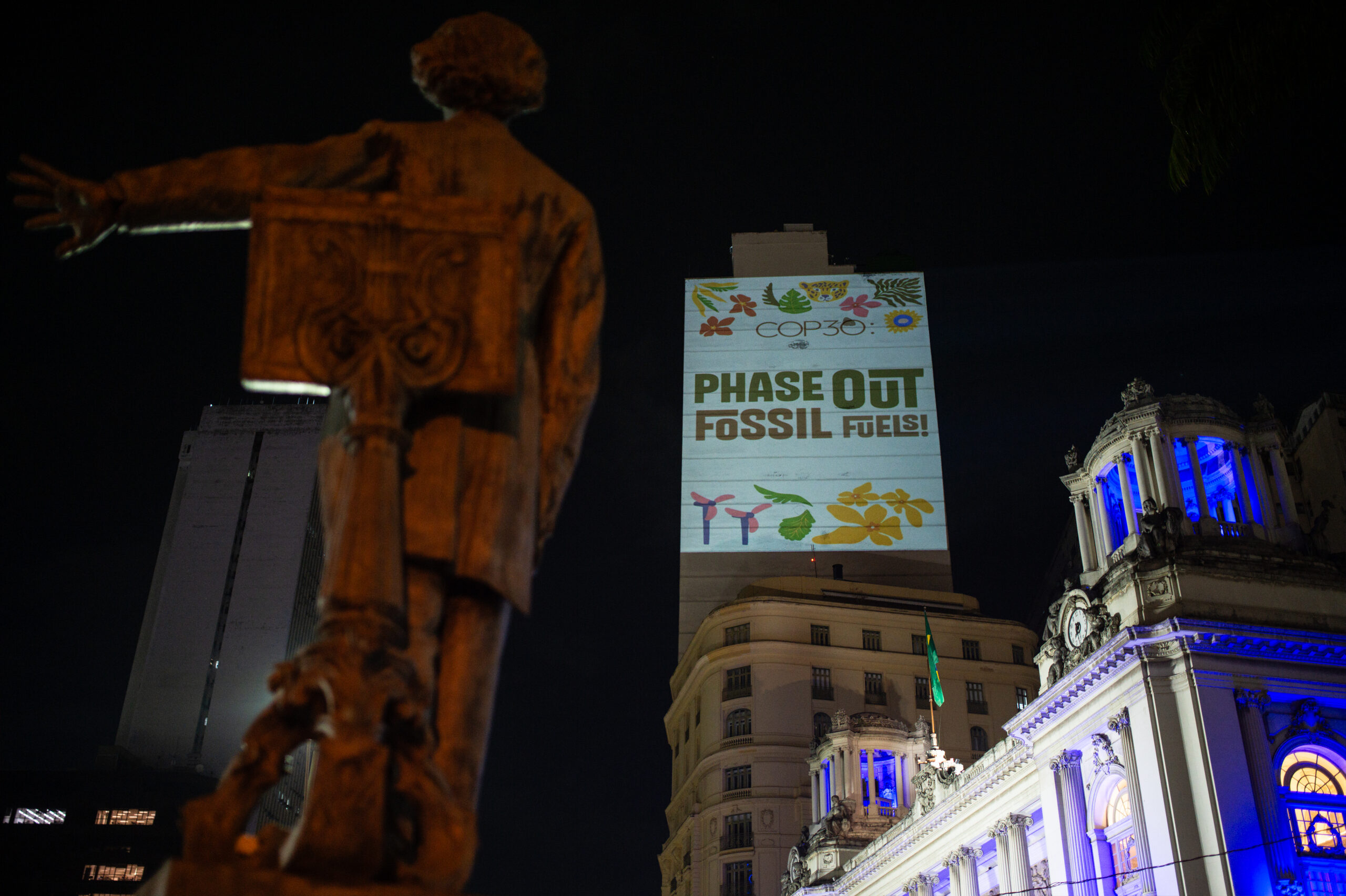
Day before COP30, activists from the Glasgow Action Team, Ekō, and partners illuminated landmarks across Rio de Janeiro, Brazil with powerful messages. Credit: Glasgow Action Team.
Last week in Virginia, voters just made history — electing the Commonwealth’s largest-ever climate majority and sending a powerful message: climate progress is possible when people organize, vote, and demand it.
Abigail Spanberger’s decisive 15-point victory for governor, alongside Lieutenant Governor-elect Ghazala Hashmi and Attorney General-elect Jay Jones, capped an extraordinary election night. Across the House of Delegates, a wave of clean-energy champions swept into office from Chesapeake to Blacksburg. It was a clean sweep for a clean future — and a stunning rebuke to climate denial and division.
But this moment isn’t just about Virginia. It’s a signal to the world that the movement for climate action is moving forward — with or without Donald Trump.
The World Isn’t Waiting
As world leaders gather in Belém, Brazil, for COP30, the planet faces record heat, growing inequality, and rising urgency. Yet the world is not paralyzed. Countries across the Global South and North are uniting around the idea that physics doesn’t care about politics — and that progress won’t wait for climate deniers.
Even as President Trump refuses to engage with the global process — skipping COP30 and undermining U.S. commitments — nearly 200 nations are continuing to implement the Paris Agreement, build clean-energy industries, and invest in resilience. Clean-energy investment now outpaces fossil fuels two to one, proving that the market, the science, and the moral arc are all bending toward a livable planet.
Day before COP30, activists from the Glasgow Action Team, Ekō, and partners illuminated landmarks across Rio de Janeiro, Brazil with powerful message. Credit: Glasgow Action Team.
From city halls to parliaments, leaders are moving to:
Make polluters pay — taxing fossil fuel profits and ending wasteful subsidies.
Cancel climate-crushing debt — freeing developing nations to invest in renewable energy and adaptation.
Finance the transition fairly — through grants, not more loans.
Phase out fossil fuels — fast, fair, and forever.
The message is clear: the climate crisis won’t pause for political gridlock. The world is moving — and the U.S. must choose whether to lead or be left behind.
A Call for Courage at COP30
COP30 in Brazil marks ten years since the Paris Agreement. It’s the moment to recommit to the 1.5°C goal, cement a fair fossil-fuel phaseout, and unlock trillions in climate finance.
And it’s the moment to prove that the world’s cooperation is stronger than one man’s denial. Whether Trump attends or not, the momentum is real — in legislatures, labs, and local communities everywhere.
As Brazil hosts, the world will look for real leadership: protecting forests, ending new oil drilling, and uniting the Global North and South around justice, not delay.
Innovation and Integrity: Exploring “Plan B” with Eyes Wide Open
At CCAN, we’ve always fought for rapid, just decarbonization. That remains our north star. But the planet is warming faster than expected, and even with record investment in clean energy, we may need temporary, carefully researched backup strategies to protect vulnerable communities from runaway heat.
Day before COP30 activists from the Glasgow Action Team, Ekō, and partners illuminated landmarks across Rio de Janeiro, Brazil with powerful messages. Credit: Glasgow Action Team.
That’s why CCAN now supports transparent, equitable research into solar radiation modification — sometimes called geoengineering. The idea: studying whether reflecting just 1–2% of sunlight away from Earth could temporarily cool the planet while we complete the clean-energy transition.
We do not advocate deploying such technology at this time. We advocate studying it safely, democratically, and globally — ensuring that any discussion of geoengineering includes the voices of those most affected, especially from the Global South and environmental-justice communities.
Our guiding principles are clear:
No substitute for ending fossil fuels.
Full transparency and public participation.
Equity and justice at the center of research.
You can read CCAN’s Statement of Principles on Geoengineering and learn more about our position and resources on our webpage.
The Path Ahead: Hope, Not Hesitation
This month’s elections in Virginia remind us that people power works. The activism, organizing, and optimism that fueled those victories can ripple outward — to Washington, to Brasília, and to the world stage.
We cannot afford despair or delay. The planet is moving forward — from new climate majorities at home to new alliances abroad.
Trump’s absence from COP30 doesn’t matter. What matters is that the rest of us show up — determined, united, and ready to act.
Now is the time to keep pushing. Pushing for justice in climate finance. For accountability for polluters. And for bold innovation grounded in science and equity. Because the world can — and will — move forward without Trump.
Want to help build that future? Join CCAN’s efforts to fight for climate justice, innovation, and action across Maryland, D.C., Virginia, and beyond.
Your electricity bill is going up again. And no, it’s not just inflation. A big part of the problem is PJM Interconnection, the federally regulated but largely independent grid operator that controls the flow of power to 65 million people across 13 states and the District of Columbia. Instead of embracing cheaper, cleaner energy, PJM has clung to its fossil fuel biases, and we’re all paying the price.
Every year, PJM holds a “capacity auction” that determines how much consumers will pay to guarantee electricity for future years. On Sept. 1, electric bills increased as a result of the 2024 capacity auction. And earlier in the summer, when PJM released the 2025 auction results, households across much of the region learned that their bills would go up once again in 2026. The blame doesn’t rest on abstract market forces; it rests on PJM’s refusal to prioritize connecting clean energy to the grid.
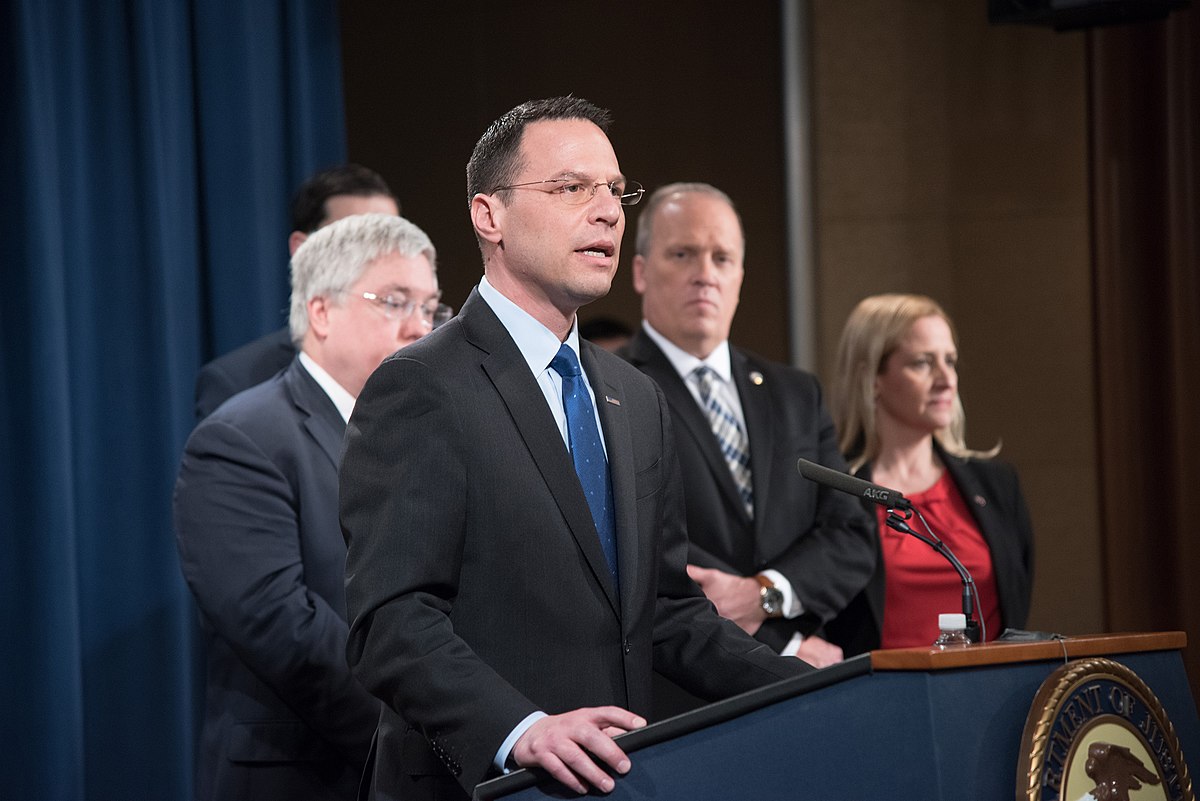
Pennsylvania Governor Josh Shapiro
At a moment when new renewable technologies promise abundant, low-cost and reliable power, PJM has allowed the grid to stagnate. Instead of connecting the countless clean energy projects that have been stuck in a decade-long queue, PJM has fast-tracked fossil fuel plants, mostly gas-fired, to jump this very same line. This is not just bad for the environment. It’s also a direct hit to our wallets. Oil and gas prices are volatile. Coal plants are aging, inefficient and costly. Yet PJM seems determined to double down on fossil fuels, forcing consumers to pay more.
Recent pushback from politicians, led by Pennsylvania Gov. Josh Shapiro, has successfully convinced PJM to institute a price cap, putting a limit on how high consumer prices can be. In states like Maryland and Virginia, customers served by BGE and Dominion Energy may pay less next year thanks to this pro-consumer response — but it is only a temporary solution, and the rest of the region will face higher costs. Pushback at the state level, however, shows that PJM’s policies can be challenged. Political leaders can successfully fight for reforms that help our pocketbooks.
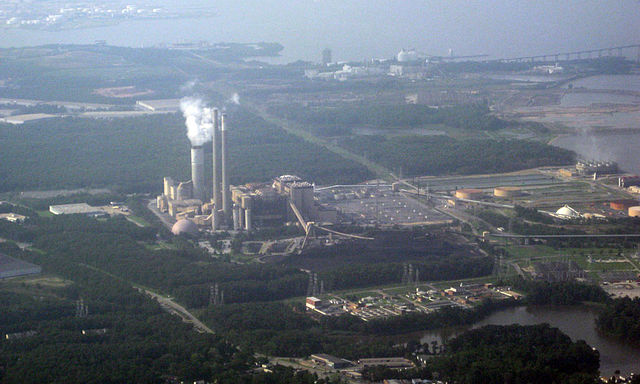
In Maryland, prices are rising for another reason as well. Earlier this year, as the Chesapeake Bay Journal reported in its April issue, PJM mandated that two coal plants had to remain online even though their owners wanted to retire them. Stuck with its fossil fuel-centric worldview, PJM saw no alternative to meet energy demand than to keep inefficient coal plants online past their retirement date. Because coal is so expensive, this decision will cost some Marylanders up to 24% more per month, according to RTO Insider. This is nothing but a subsidy for highly polluting, uneconomical coal plants, imposed on consumers who had no say in the process.
Air photo of Brandon Shores Coal Plant in Anne Arundel County, Maryland, near Baltimore.
The bitter irony is that PJM’s barriers to clean energy are self-inflicted. More than 3,000 renewable energy projects are currently waiting in PJM’s queue, according to Inside Climate News. If even a fraction were given the green light, consumers could see significant long-term price relief. Wind and solar are now cheaper than coal and gas in most of the country. Battery storage, once a futuristic concept, has rapidly scaled to make those renewable resources reliable around the clock. But as long as PJM keeps its thumb on the scale for fossil fuels, the grid will remain more expensive and less resilient than it should be.
Despite these challenges with PJM, reforms are being discussed. For the first time in decades, this fall PJM filled two board seats and will appoint a new CEO. New leadership could finally bring PJM into the 21st century, prioritizing clean energy integration and consumer affordability. Or, if fossil fuel interests fill the seats, we could see more of the same: higher bills, higher emissions, and fewer options for customers.
This winter, PJM will revisit what it calls the Reliability Must Run rule, the provision that forced the Maryland coal plants to stay online — and could do the same elsewhere. The stakes could not be higher. This isn’t about something abstract. It’s about being able to afford to keep the lights on. Consumers and elected leaders across the region must make it clear that we can never again be required to pay more for electricity to keep old coal plants online.
Unfortunately, even the reform process itself has been shaky. While there were a series of task force meetings scheduled over the summer to discuss PJM reforms, many were cancelled without explanation. It seems clear that PJM is sticking to the energies of the past while the energy prices of the future are only going up. PJM may control the levers of our grid, but ultimately, the public pays the bill. We have to make PJM care.
Jake Schwartz (he/him) is the Federal Campaigns Manager at CCAN. Jake grew up in Philly (Go Birds!) and has organized on environmental and electoral campaigns across the country, from Oregon to Indiana. His career in climate organizing began at Green Corps, an environmental advocacy fellowship, where he worked on local, state, and federal campaigns.
Most recently, he was on the Harris-Walz campaign where he helped run the Delegate Operations and then Climate Engagement teams. Outside of work, you can find him running or biking in Rock Creek Park or reading at Meridian Hill Park.
Q: Why did you decide to write The Lost Trees of Willow Avenue?
A: To prove the point that climate change has gotten so bad you can now write an entire book about the terrifying impacts of extreme weather right outside your own front door! That’s mindboggling.
On my D.C.-area street, on the 7100 block of Willow Avenue in Maryland, we’ve lost four of our oldest trees – true giants – since 2019. The city arborist says it’s climate change, pointing to the recent mass mortality of oaks across the region. There’s also rampant flooding on my block and the terrifying spread of Lyme disease (mild winters no longer kill off the ticks).
The book is full of drama as I follow my neighbors – grieving over lost trees, many of them fearful for the future, but also determined to fight back. My neighbor Dorothy, a midwife, builds a geothermal heating system behind her house. Electric cars now roll up and down my street making that sound my neighbor Paula calls “the faint harmony of angels.”
Q: How was the book’s title chosen, and what does it signify for you?
A: First and foremost, this book is a love letter to trees, especially the old oak trees that once dominated my neighborhood. So the title seemed obvious.
One arborist told me, “Our native trees are no longer native. We’ve changed the climate – so now they are foreigners. And so they’re dying.” They’re dying from record rainfall and extreme winds, and intermittent sharp droughts. The loss is unbearable.
Trees are such miracles. They talk to each other. They store knowledge. They tell time. They sleep. They feel pain. They provide countless services to humans, boosting our immune systems, giving us a sense of spiritual and emotional well-being. Now these trees are dying on my street – and yours. Their death is a warning: We humans could soon be foreigners too on this planet!
Q: In a Washington Post review of the book, Richard Horan writes, “Tidwell stands alongside many other trumpet-playing angels of the apocalypse — Rachel Carson, James Hansen, Jane Goodall, Bill McKibben and Elizabeth Kolbert, to name a few — in the ongoing fight to save our planet.” What do you think of that assessment?
A: I’m humbled to be included in this list of environmental prophets. In her book Silent Spring, Rachel Carson warned in 1962 that America’s farms and cities were growing silent from songbirds being killed by the reckless use of DDT.
In The Lost Trees of Willow Avenue, I write that our landscapes are growing silent again, for a different reason. Many of our biggest trees are disappearing and the sound of wind blowing through those magnificent leaves is turning to silence.
Q: Given the current political situation, what do you think lies ahead when it comes to climate issues?
A: As I write in the book, there’s still much to be hopeful about. The clean energy revolution is unstoppable. Around the world, every day, human beings deploy a gigawatt of new solar power. That’s the equivalent of a giant nuclear plant of solar power every day. Donald Trump can’t stop that.
But there’s so much more to do, including removing carbon from the atmosphere by planting more trees and – surprisingly – burying many of our mature trees in the ground when they die from climate change. Burial can lock the trees’ accumulated carbon into the ground for up to a thousand years.
My colorful neighbor Dr. Ning Zeng, a climate scientist, specializes in this. He’s a fascinating “undertaker” character in the book as trees tragically fall around us.
Q: What are you working on now?
A: A PBS film crew is making a documentary based on the book and I’m working closely with them. I also have a 4,000-word adaption from the book coming out in Sierra magazine in September. But no other book project is on my desk just yet.
Q: Anything else we should know?
A: No one has written a book like The Lost Trees of Willow Avenue before. I hope prospective readers will understand that, even though it’s about one street, it’s full of drama, full of life and death and sorrow and dreams among people caught in the global drama of climate change.
Stories like this are happening on every street and on every farm in the world. My little block illuminates a staggering universal truth.
For more about The Lost Trees of Willow Avenue, here’s a 15-minute film companion to the book. And to learn more about my writing and activism visit my website www.mike-tidwell.com.
About the author: Deborah Kalb is a freelance writer and editor. She spent about two decades working as a journalist in Washington, D.C., for news organizations including Gannett News Service, Congressional Quarterly, U.S. News & World Report, and The Hill, mostly covering Congress and politics. Her book blog, Book Q&As with Deborah Kalb, which she started in 2012, features hundreds of interviews she has conducted with a wide variety of authors.
She is the author of the forthcoming novel Off to Join the Circus (Apprentice House, 2023), as well as three novels for kids, Thomas Jefferson and the Return of the Magic Hat (Schiffer, 2020), John Adams and the Magic Bobblehead (Schiffer, 2018), and George Washington and the Magic Hat (Schiffer, 2016)
By Whitney Peterson, Alliance for Just Deliberation on Solar Geoengineering; Quentin Scott, Chesapeake Climate Action Network; and Natasha Vidangos, Environmental Defense Fund
As global temperatures rise and emissions reductions fall short of targets, institutions around the world – from foundations to universities, corporations to governments – are beginning to discuss solar geoengineering (also called solar radiation modification or SRM) research. But until recently, many U.S. civil society organizations working on climate, justice, health, and science didn’t have the opportunity to engage in this conversation in earnest. Whether too technical, too fringe, or too fraught, the issue is often treated as too sensitive and taboo to address directly.
First steps to change this norm began earlier this month in Washington, D.C., where a new kind of conversation took shape. The Alliance for Just Deliberation on Solar Geoengineering (DSG), the Chesapeake Climate Action Network (CCAN), and the Environmental Defense Fund (EDF) co-hosted a collaborative two-day workshop that provided an unprecedented learning forum for U.S. climate groups on the state and direction of SRM research. The workshop provided a chance to explore what role the climate movement could play in this evolving conversation, approaching the issue not with advocacy but with curiosity, concern, and a sense of shared responsibility.
SRM refers to a set of proposed technologies that aim to reflect a small portion of sunlight back into space to cool the planet. While not a substitute for reducing emissions, this approach could, if carefully researched and governed, potentially help reduce some of the most dangerous near-term climate risks. However, it also raises profound ethical and political questions: What are the other environmental and health impacts and how would they be distributed? Who gets to decide whether it’s pursued? How will risks and responsibilities be shared? And as research moves forward, how can it be governed in ways that are transparent, inclusive, and accountable?
Breaking Through the Polarization
Across the U.S., SRM is becoming a more visible part of the climate conversation, attracting growing interest from media, funders, and policymakers. At the same time, misinformation has been spreading rapidly, and several state-level bans fueled by conspiracy have been proposed and in some states passed. Too often, the public conversation has been dominated by either hype or fear, with little science-focused discussion in between.
The workshop was designed specifically to interrupt that dynamic. For many participants, the workshop marked the first time this topic had been discussed in-depth by U.S. climate groups. The group included climate advocates, grassroots organizers, and nonprofit leaders — people who have collectively spent decades working on the frontlines of climate, justice, and environmental health. Chatham House Rules were in place to encourage candid conversation, dissenting views, and the focus on ideas over identities, all of which created space for real dialogue. The goal wasn’t consensus, and no one was expected to walk away with a policy stance. This was about showing up, listening, and beginning to contribute to the dialogue on this complex topic.
Exploring Risks, Responsibilities, and Roles
Day one focused on context and foundational knowledge: laying out the basics of what SRM is, in addition to understanding why interest in it is growing worldwide. Presentations and panels were intentionally structured to move from foundational context, including the social dimensions of the technology and the current state of physical and social science research, to the key issues, tensions, and concerns that climate-focused NGOs are likely to face when engaging with the topic. Participants raised thoughtful and challenging questions about the risks of researching the technology, who gets to shape its future, and what might be lost if civil society chooses not to engage.
On day two, the workshop turned to governance, new perspectives, and the global context of SRM. Participants examined the patchwork of state-level bans, emerging private sector activity, the growing influence of misinformation, and perspectives from the Global South. A shared theme emerged: decisions about SRM are already underway—and without active participation from the climate movement, they risk being driven by actors with very different priorities and values.
Across panels and breakout discussions, several ideas stood out:
Civil society brings what the conversation lacks. SRM is often treated as a technical problem, but decisions about it are deeply political. Building capacity for engagement underscores legitimacy and justice, which are essential to any meaningful decision-making process.
Clear, fact-based communications from credible voices are essential. In the absence of reliable sources and trusted messengers, misinformation and conspiracy theories often fill the gap, influencing perceptions before meaningful dialogue has a chance to take root.
Trust is a prerequisite. Scientific evidence alone isn’t enough to move forward responsibly. Transparency and accountability are essential from the start.
Justice must be the baseline. Communities most vulnerable to climate impacts, particularly in the Global South, are largely being left out of early SRM conversations. Without global deliberation, there’s a risk that this approach could reproduce, or even deepen, existing patterns of climate injustice.
A First Step, Not the Final Word
The workshop closed with an invitation to continue the conversation. In breakout discussions, participants explored next steps—from educational briefings and messaging tools to scenario exercises and future dialogues. No consensus was expected or required. What mattered was the opportunity to reflect on what engagement might look like, and why it matters.
SRM raises complex questions, many of which remain unresolved. Choosing not to weigh in at this stage may seem neutral, but it still shapes outcomes by leaving decisions to others, often without the perspectives of those most affected. This moment doesn’t call for predetermined positions, but it does call for curiosity and space to think critically about how to approach SRM research, if it moves forward, in a way that aligns with democratic values such as justice and equity.
This workshop provided a starting point for asking better questions, creating space for diverse voices, and shaping how SRM is understood and governed in the years ahead.
Walking into your kitchen and taking a deep breath should mean peace of mind, knowing the air is safe for you and your family. But the reality is that gas stoves — even when switched off — can slowly leak methane, a powerful greenhouse gas linked to increased risks of asthma and lung irritation. If you’re considering an upgrade, here’s some good news: switching to an electric or induction stove is simpler — and more rewarding — than you might think.
You May Qualify for Free Upgrades!
Are you a D.C. resident? The D.C. Sustainable Energy Utility (DCSEU) offers FREE electrical upgrades for eligible households. If you are eligible, you can get not only a free electric stove, but also a new, clean, and energy-efficient heat pump for heating and cooling, a water heater, a clothes dryer, and more.
If you’re not eligible for free upgrades, you can still make the switch and even apply for rebates from DCSEU.
Wondering How to Make the Switch?
Step 1: Learn about different electric stoves
Electric stoves come in many forms. For the most efficient heating technology, induction stoves are the way to go, but any electric stove is healthier than burning methane gas inside your home. To make your kitchen healthier without spending a bundle, you can also use an induction hot plate, a countertop oven, or an air fryer to cook without removing your gas stove.
Step 2: Assess your electrical wiring
If you currently have an electric stove, you probably don’t need to upgrade your wiring. To switch from a gas stove to an electric one, you may need to upgrade your electrical panel. After the panel is upgraded, a plumber or electrician will help you cap the gas line. When you pick out your stove, talk to your electrician to make sure the stove plug will match your newly installed 240V plug.
Step 3: Check your current pots and pans
If you decide to upgrade to an induction stove or cooktop, which uses magnetism to create heat, you may need to check your cookware. You can test your pots and pans using a magnet: if a magnet sticks to the bottom of your pots and pans, you’re good to go! Iron and steel cookware are great options for induction cooking!
Step 4: Select your new stove!
In the District, the DC Sustainable Energy Utility offers up to $800 in rebates to help you pay for your new electric stove. If you want a DCSEU rebate, make sure to buy from a DCSEU-approved supplier. After it’s installed, enjoy your efficient, healthy, and easy-to-clean new stove!
Chesapeake Climate Action Network is a regional grassroots climate action group. We are building a people-powered movement for bold and just solutions to climate change – from enhancing access to clean energy to stopping dirty pipe investments. And we want you to join us!
Sound good to you? Click here to meet with an organizer to learn about how you can become involved with our volunteer team fighting for climate action in DC and beyond.
About the author: Ayla Frost (she/her) joined CCAN in January 2024 as DC Intern, and has worked as a full-time DC Organizer since September 2024. Ayla grew up in Oakland, California, but her childhood was marked by frequent trips to family in Baltimore, Maryland.
Over time, she developed a deep fondness for both of the bays in her life – the San Francisco Bay and the Chesapeake Bay – and became determined to do what she could to protect the natural world. As she learned more about the climate sphere, her real passion in the climate world was listening, connecting with, and uplifting the voices of people.
By Michelle Ueltschi, CCAN’s Carol Brantley Environmental Justice Fellow
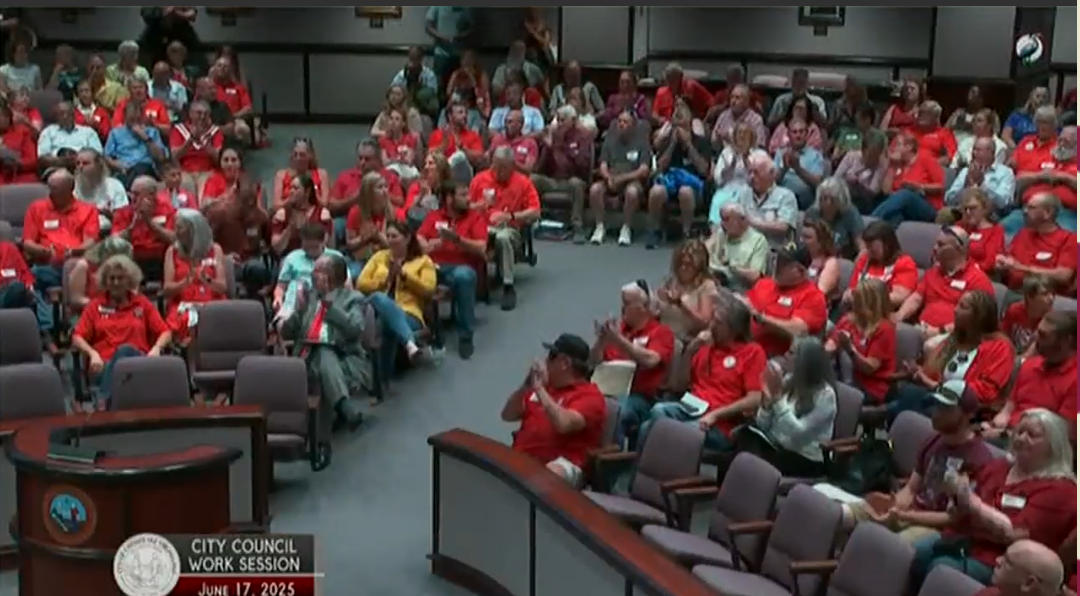
As I approached the Chesapeake City Hall, heart pounding, I had no idea what to expect. The closest I’d ever been to a City Council meeting was watching Leslie Knope on Parks and Recreation! Entering the chamber, I was immediately shocked. A sea of Chesapeake residents, all wearing bright red and proudly sporting “No Data Center” stickers, took me by surprise.
I knew the council was voting on the data center that night, but I had no idea how much the community was strongly united against it. But my real focus was the first agenda item of the night: the proposal for a Chesapeake compressor station that would bring more toxic pollution to our community.
Why the Dangers of This Compressor Station Hit Close to Home
Virginia Natural Gas (VNG) is proposing to build a new compressor station in a residential neighborhood in Chesapeake. Compressor stations are facilities placed along natural gas pipelines to boost pressure and keep gas moving over long distances. These stations release toxic air pollutants and greenhouse gases, including methane and cancer-causing gases like benzene. This compressor station is planned to be located within five miles of a school where my mom works, making it a very personal issue for me.
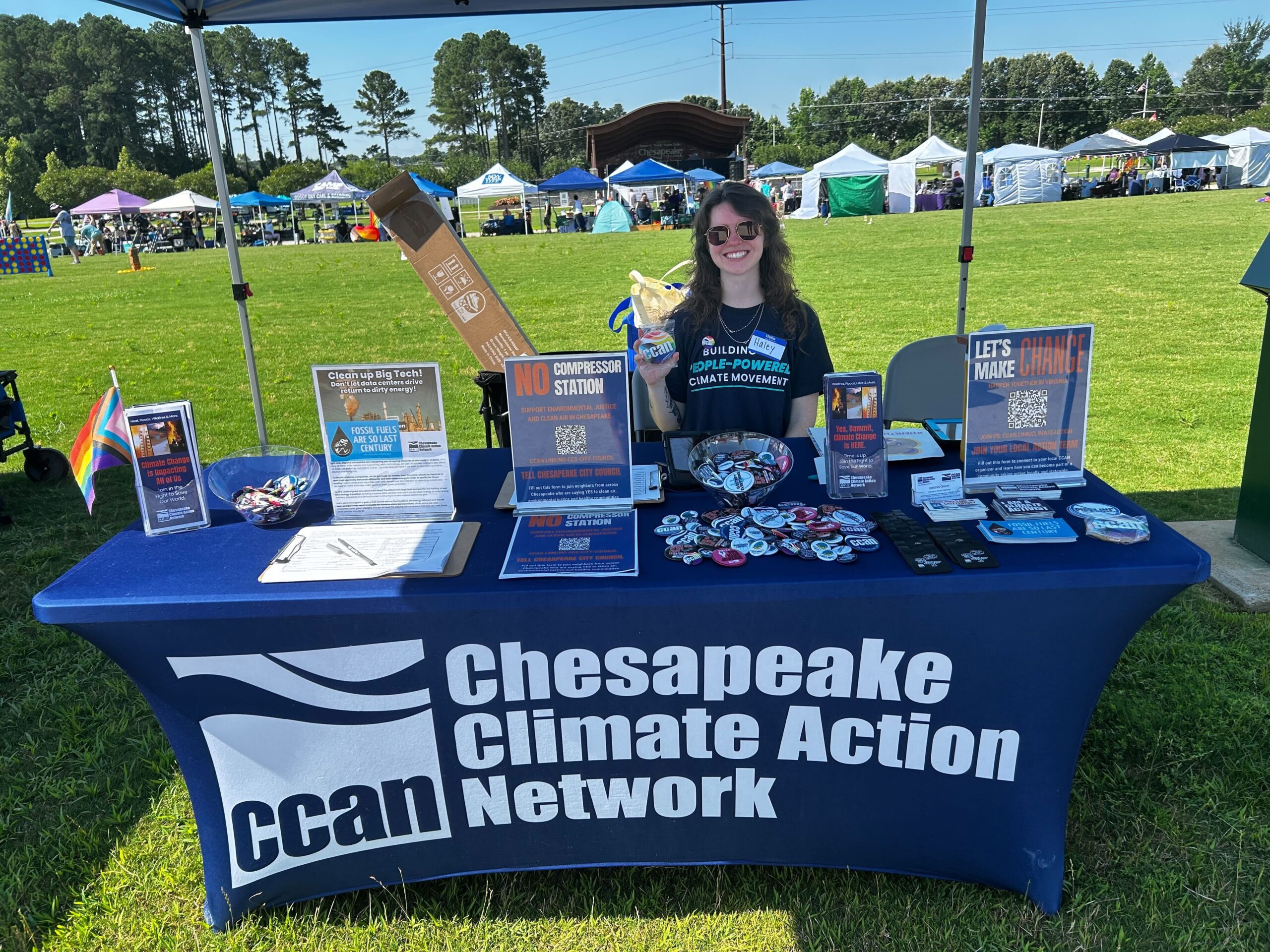
As I’ve been talking to people about this project while canvassing and at festivals, I’m inspired by the passion and energy Chesapeake residents have shown in fighting to protect our community. I’ve heard stories from longtime residents longing for the preservation of their rural communities.
I’ve listened to grandparents recount stories of their childhoods, sharing how they have seen the city become more polluted, storms getting worse, and that they fear the future for their families. During these conversations, CCAN and other organizations gathered hundreds of signatures from Chesapeake residents telling the city council that they do not want this project built in their community.
A Landmark Victory: Chesapeake City Council Rejects Polluting Projects
That night, after hours of testimony and debate, the Chesapeake City Council made a landmark decision: they voted to deny Virginia Natural Gas’s sweeping rezoning request! This request would have paved the way for the compressor station and the data center. Its rejection was a huge win for residents, civic leagues, and environmental groups that raised environmental justice concerns about pollution, safety, and the disproportionate burden these projects would place on already disadvantaged communities.
I thought we had won that fight. I celebrated, closed my research tabs, and shifted my focus to other priorities. But the next morning, I received an email: Virginia Natural Gas had requested a reconsideration from the City Council. Suddenly, we were back at square one. I was confused and angry; why does one company get endless opportunities, while we have to block every single door just to stay safe?
Nevertheless, we got back to work. With only a month to act, our coalition put together a bold plan to urge the City Council to stand firm and listen to the voices of Chesapeake residents who oppose this project.
Join Us to Protect Chesapeake’s Future
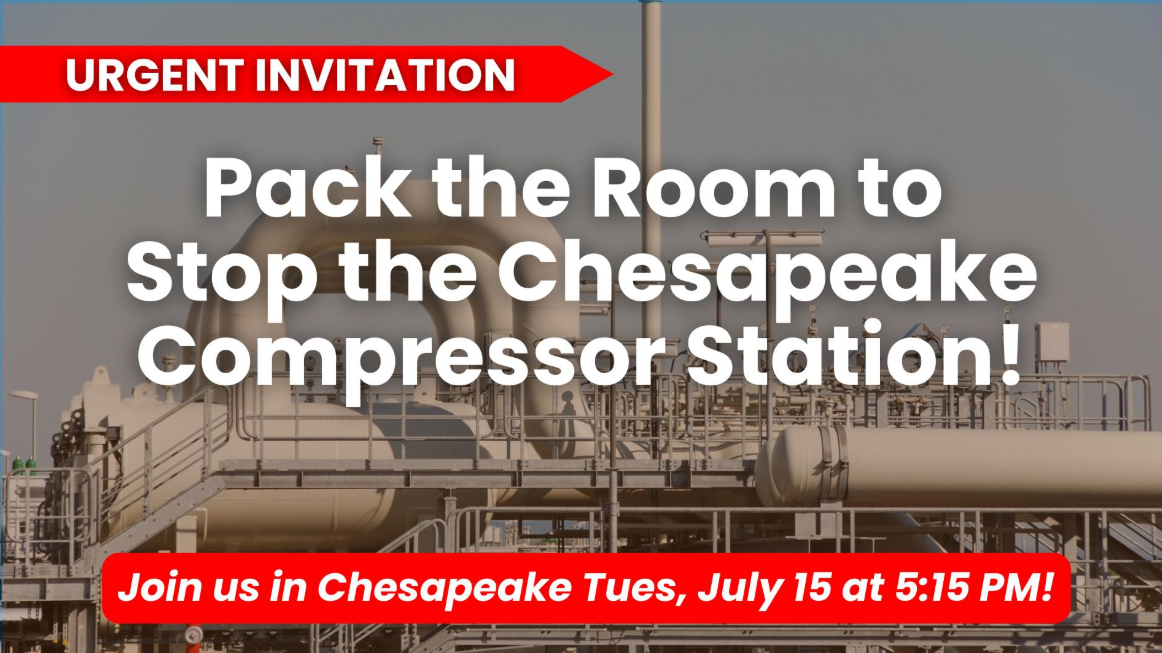
Here’s the bottom line: the only way we can ensure this project does not harm our communities is to pack the city council chamber on July 15th at 6:30 PM. We need to show the city council how many of their constituents are against this project, and remind them we are watching their vote closely.
Before the meeting, at 5:15, CCAN will be holding a mini rally to prepare residents to speak out against the project. We will be providing shirts, coaching residents on how to address their representatives, and we will have free snacks! Can you make it out to the mini rally or the city council meeting on July 15th? Sign up here to let us know you’re coming and bring a friend!
We’ve beat this thing before. Let’s beat it again!
About the Author: Michelle Ueltschi (she/her) has been working in Hampton Roads, Virginia as a Carol Brantley Environmental Justice Fellow for the summer of 2025. She has recently graduated from Columbia University with a degree in sustainable development.
As a Hampton Roads native, Michelle found her passion for the environment at a young age and spent many years in high school advocating for the local environment and working to protect her hometown of Virginia Beach.
Now, after finding her passion for climate justice at Columbia, Michelle is bringing the knowledge and experience she gained in New York City back to the Chesapeake Bay!
For three days from July 4, a tropical storm brought a deadly deluge to a region of central Texas known as Hill Country, which is consideredone of the deadliest places in the US for flash flooding. The worst of it happened in Kerr County, including, tragically, in summer camps with many children.
Fueled by remnants of Tropical Storm Barry, torrential rainfall surged the river by 25 to 30 feet in under an hour. At times, the water rose one inch every 25 seconds. At the time of writing, more than 100 people are dead, including more than 35 children, with 170 people still missing.
Unfortunately, this is not new. Central Texas – especially the Hill Country – is known as “Flash Flood Alley” due to steep terrain, shallow soils and intense rainfall and has flooded nearly once every decade over the past 100 years.
Even so, it’s getting worse with climate change, and events like this will become more common in this region and elsewhere. Humidity and heat are rising in the Gulf, bringing more moisture. Meanwhile, drought dries out soil, making it less absorbent. When rain does fall, it floods faster and more violently. Anew UN report calls worsening droughts “a slow-moving global catastrophe.”
The Need to Be Prepared
But it’s not just about climate change. It’s about emergency preparedness. The region has poor cell service, so warnings from the National Weather Center can sometimes not get through. For years, Texas debated a $1-million flood alert system for Hill Country to prevent disasters just like this. But it wasnever funded, despite the area’s 50,000 residents and thousands of young campers.
Meanwhile, the Trump Administration is taking aim at every possible agency involved in emergency preparedness, with mass budget cuts and layoffs at the National Oceanic and Atmospheric Administration, which runs the National Weather Service, the Federal Emergency Management Administration, and more. US National Weather Service budget cuts meant that a veteran warning coordination meteorologist for the region retired early this spring. His role was to work with local communities to help them prepare for events like this, to get the national weather alerts to the community members in need. Buthe was not replaced, leaving a critical gap just months before the flood.
The Deluge is a climate thriller. And it is a political epic. And it is so much more.
At nearly 900 pages, spanning a range of decades and characters, it showcases a world responding too slowly to environmental breakdown. There are scientists desperately lobbying for reform, activists risking their lives for visibility and ordinary people watching the weather change everything, including a truly terrifying — and too real scene of a wildfire in downtown Los Angeles.
Markley shows how systemic failure creeps forward through inertia, denial and political dysfunction. Stephen King called it this generation’s Grapes of Wrath.
Choice quote:
As bureaucrats have rediscovered again and again from time immemorial, getting people to do what is in their best interest is often more difficult than unleashing their worst natures.
By: Kim Stanley Robinson Publisher: Orbit Year: 2020
Sometimes, though I wish it weren’t the case, a crisis is needed to catalyze action. The Ministry for the Future by Kim Stanley Robinson opens with a harrowing heatwave in India that kills millions yet leads to the formation of an international agency under the UN, nicknamed the “Ministry for the Future.” Its mandate: to advocate for future generations and protect life on Earth.
What follows is a fascinating mix of fiction and speculative policy, as Robinson explores economic restructuring, geoengineering, climate migration, eco-terrorism, and radical diplomacy. The novel follows a mosaic of voices—scientists, refugees, central bankers, insurgents, bureaucrats—as the world shifts from a state of emergency to one of sustainability.
The novel doesn’t shy away from collapse, but insists that coordinated global action is still possible—even if it’s messy, compromised, and contested. The Ministry for the Future reads like a hybrid of climate fiction and future history, and has become a touchstone for policy thinkers and climate advocates alike. It doesn’t just ask what might happen. It asks what we’re willing to do.
Choice quote:
As bureaucrats have rediscovered again and again from time immemorial, getting people to do what is in their best interest is often more difficult than unleashing their worst natures.
How fast are things changing? To get some perspective, it’s worth going back to the beginning of time. Or at least, the beginning of the earth.
In clear yet gorgeous prose, geologist Marcia Bjornerud introduces readers to the idea of “timefulness” — a sense of planetary history that extends far beyond human timescales. She argues that modern society is “chronically short-sighted,” and that our inability to grasp deep time has left us blind to the consequences of our actions, particularly when it comes to environmental stewardship.
The book blends field stories, geological insight and philosophical reflection, making complex concepts easy to understand. She doesn’t offer doom; she offers perspective.
Choice quote:
It is also not the “end of nature” but, instead, the end of the illusion that we are outside nature. Dazzled by our own creations, we have forgotten that we are wholly embedded in a much older, more powerful world whose constancy we take for granted. As a species, we are much less flexible than we would like to believe, vulnerable to economic loss and prone to social unrest when nature—in the guise of Katrina, Sandy, or Harvey, among others — diverges just a little from what we expect.
Yes, I’m including my own book in this list. But writing it really did help me work through my personal experience of what climate change feels like, and I hope it can do the same for others. My debut novel explores life in a state of emergency through a surreal phenomenon known as “the unmapping”. At 4 am in New York City, all the city’s buildings mysteriously swap places. The Empire State Building ends up on Coney Island and K-town bars are in Queens. The next night, it happens again. It’s a disaster that breaks down the utility grid and leads to thousands of people becoming lost.
The story follows two workers at the city’s Emergency Management Department, tasked with holding the city together as the crisis escalates. As attention slowly turns to stopping the unmapping, the book’s characters navigate a restructured landscape in search of loved ones, safety and meaning.
Many believe it’s a bizarre side effect of global warming, an era when the highly improbable becomes disturbingly routine. I wrote this surreal story with the hope that it would allow the reader to experience how climate change feels. With Texas waters rising at 25 inches per minute, nothing feels stable and everything familiar has become strange — it seems quite possible that the laws of physics will change beneath our feet.
As climate emergencies grow more frequent, the role of emergency workers becomes more vital. In the book, the workers confront the limitations of the systems in place and work to improve them. Ultimately, their job is about saving lives. The real-life decision by Texas officials to forgo a flood warning system that could have saved lives only reinforces the story’s relevance.
Choice quote:
It is hard to say when things started turning around for the better. Is it possible to pinpoint a particular moment when everyone stopped running around trying to live in a broken world and started instead trying to fix it?
A version of this post was initially published on “This Week, Those Books,” which links the big international story to the world of books. Their aim is to provide crucial context — from fiction and non-fiction — to the shouty, doomscroll news cycle.Read it here.
By Ayla Frost, CCAN, and Harrison Pyros, We Power DC
Keep an eye on your electricity bills this summer! As we know, climate change is making our summers hotter, and more households are cranking up the air conditioning. But that isn’t the main reason your bill is skyrocketing. Pepco’s latest bill increase follows a pattern of rate hikes that it’s been forcing on customers for years – and we can’t keep footing the bill.
Why is Pepco raising rates?
Source: Brattle Economic Analysis of Clean Energy Tax Credits Report
This June, the rates we pay for electricity are set to increase due to a bias against clean energy by D.C.’s regional power grid operator, PJM. PJM (Pennsylvania — New Jersey — Maryland) serves as “air traffic control” for the electrical grid, coordinating the movement of electricity to meet demand.
Utilities like Pepco get their electricity through PJM’s regional grid, and currently, the cost for that energy is on the rise. This is because fossil fuels are less reliable than solar and wind plants and more prone to fail during extreme weather. As PJM consistently prioritizes unreliable fossil fuels over clean energy, it has to tap into additional resources to keep the grid afloat when fossil fuels fail — creating additional cost that is, of course, passed on to consumers.
This means that Pepco customers can expect to pay up to 18% more on their Pepco bills starting this June. And that’s not all. This rate hike fits into an alarming pattern of rate increases by Pepco and other utilities in the D.C. region.
Just five months ago, in January, Pepco was responsible for another rate hike, which increased electricity rates in D.C. for the third year in a row.
Why so many hikes? Quite honestly, they’re doing this because they can. In practice, Pepco has a monopoly on our electricity in D.C., and is regulated by D.C.’s Public Service Commission, which is responsible for protecting consumers, regulating monopolies, and conserving natural resources. Unfortunately, right now, the Public Service Commission (PSC) is failing to protect D.C. residents from higher bills. The PSC has already approved Pepco’s “Climate Ready Pathway D.C. Multi-Year Plan,” which means D.C. communities can expect more hikes in the coming years.
Residents are already struggling to pay for housing, groceries, health care, education, and so much more. We can’t keep footing the bill for energy monopolies’ corporate greed. We are entering a serious crisis of energy affordability, and the PSC is failing to stop it. D.C. Council needs to step in to protect ratepayers from this crisis.
While decisionmakers drag their feet, here’s what you can do right now to lower your energy bills:
Electrify your appliances. You’ll save money on your bills if you upgrade your old appliances, including water heaters, clothes dryers, and gas stoves. DC Sustainable Energy Utility (DCSEU) offers programs to help you afford the switch to energy-efficient electric appliances like heat pumps, smart thermostats, and induction stoves. If you’re eligible, swapping out your appliances might be completely free!
Increase your energy efficiency. If you qualify for the Weatherization Assistance Program, you can receive an energy audit and free upgrades to increase the efficiency of your home. These won’t make your home electric, but they can help save you money, and weatherization will also help the environment.
Get solar panels. DCSEU offers Community Solar and Solar for All programs to install solar panels on your roof for free, if you qualify! DC also offers Solar Renewable Energy Credits (SRECs) for solar energy generation. These can be traded or sold, in effect earning you dividends for providing green energy.
We are lucky to have programs that can help D.C. residents – whether we rent or own our homes – pay our bills. But this is a crisis that we can’t fix with band-aids, we need to address the root of the issue.
How can I fight these rate hikes?
We need you with us. CCAN and our partners at We Power DC are working hard to hold our utilities accountable. We’ve turned out dozens to testify against proposed rate hikes, and submitted comments in droves. Now it’s time to push D.C. Council to protect us from cash-grab rate hikes BEFORE they happen.
Take the Climate Action Survey to join CCAN’s team of volunteers pushing back on Washington Gas’ reckless rate hikes. Fired up about holding Pepco accountable? Join We Power DC to advocate for publicly owned utilities in D.C.
About the author: Ayla Frost (she/her) joined CCAN in January 2024 as DC Intern, and has worked as a full-time DC Organizer since September 2024. Ayla grew up in Oakland, California, but her childhood was marked by frequent trips to family in Baltimore, Maryland.
Over time, she developed a deep fondness for both of the bays in her life – the San Francisco Bay and the Chesapeake Bay – and became determined to do what she could to protect the natural world. As she learned more about the climate sphere, her real passion in the climate world was listening, connecting with, and uplifting the voices of people.
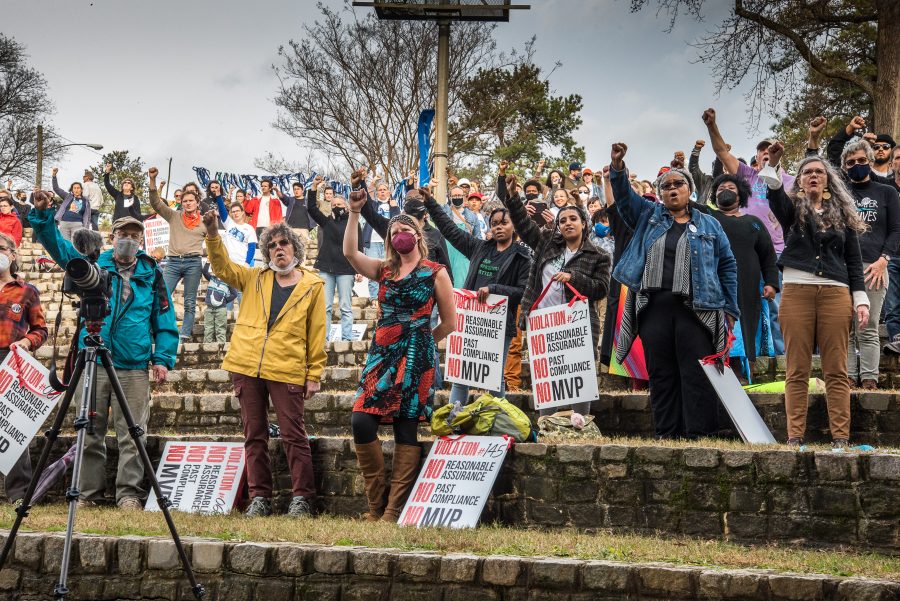
Kidest at MVP Rally in 2021 (second row, third person from right), photo courtesy of Will Kerner Photography
My journey as a Virginia climate activist began as a college intern in the fight against the Atlantic Coast Pipeline, a battle we won, proving that community power can defeat even the most well-funded fossil fuel interests. That victory taught me that Virginians can defeat giant corporations that seek to pollute our communities, and I’ve found my people.
Since then, I’ve witnessed the defeat of the polluting Chickahominy gas plant and stood shoulder-to-shoulder with neighbors as we organized against the Mountain Valley Pipeline (MVP) Southgate extension. When the first permit for Southgate was denied in 2021, it felt like another victory for the people and the planet. But with new natural gas pipelines being proposed across Virginia, the pressure on our communities and environment is only increasing. The fight is far from over, we need to act now – together!
A Dangerous Pipeline, A Bad Deal Repackaged
The MVP Southgate extension is a proposed 31-mile natural gas pipeline that would snake from Pittsylvania County, Virginia, into Rockingham County, North Carolina. The developers claim it’s necessary to meet “growing public need” for natural gas, touting contracts with Duke Energy and PSNC Energy. But as someone who’s seen these justifications before, I know this is not about meeting real community needs, but about locking our region into decades of fossil fuel dependence.
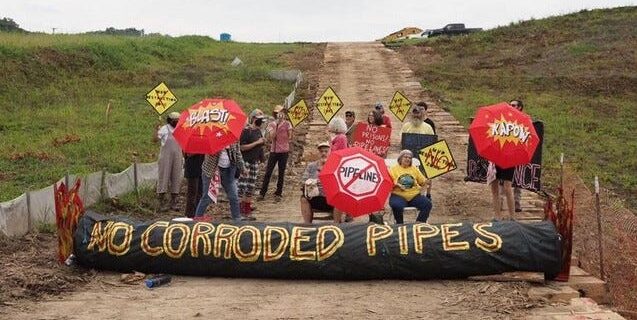
Community Resistance to the MVP on the Pipeline Route, photo courtesy of Appalachians Against Pipelines
Right now, the Southgate extension is undergoing a crucial permit application review, and your voice is needed! The U.S. Army Corps of Engineers has opened a 30-day public comment period, ending May 30, 2025, for MVP Southgate’s request for a Clean Water Act permit. This permit would allow the pipeline to negatively affect our streams and wetlands, which our communities depend on in both Virginia and North Carolina.
Join us in advocating against this dangerous pipeline and submit comments to the US Army Corps of Engineers in opposition to the project using the how to guide here.
The pipeline’s original plan was even more destructive, spanning 75 miles and requiring a massive compressor station in a predominantly Black community near Chatham, Virginia. In 2021, the Chatham community stood up to oppose the toxic pollutants that would have come from the then-proposed Lambert Compressor Station, leading the Virginia Air Pollution Board to reject an air permit based on environmental justice concerns. This win, however, was sadly short-lived. In 2023, MVP submitted a new project plan that doesn’t include the Lambert Compressor Station. The new plan now has a shorter route and a wider pipe, but these tweaks do not reduce the threat to our communities and our environment.
MVP’s Track record: Community Harm and Environmental Destruction
MVP’s track record is a warning. Construction of the main pipeline has already destroyed forests, seized private property, and violated water regulations hundreds of times. The MVP Southgate extension brings more concerns about the possibility of repeated environmental violations. Erosion from construction threatens groundwater and private wells, which are vital in our rural communities. Even worse, the risk of pipeline toxic leaks and explosions puts homes and lives in danger within a half-mile of the pipeline route.
These are not just hypothetical risks. MVP’s mainline has racked up over 350 water quality violations, many affecting rivers and streams that supply drinking water. The pipeline also turns communities, often Black, Indigenous, and low-income, into “sacrifice zones”, bearing the brunt of pollution and health risks from fossil fuel infrastructure.
People-Powered Organizing & Community Resistance Defeated Southgate Before
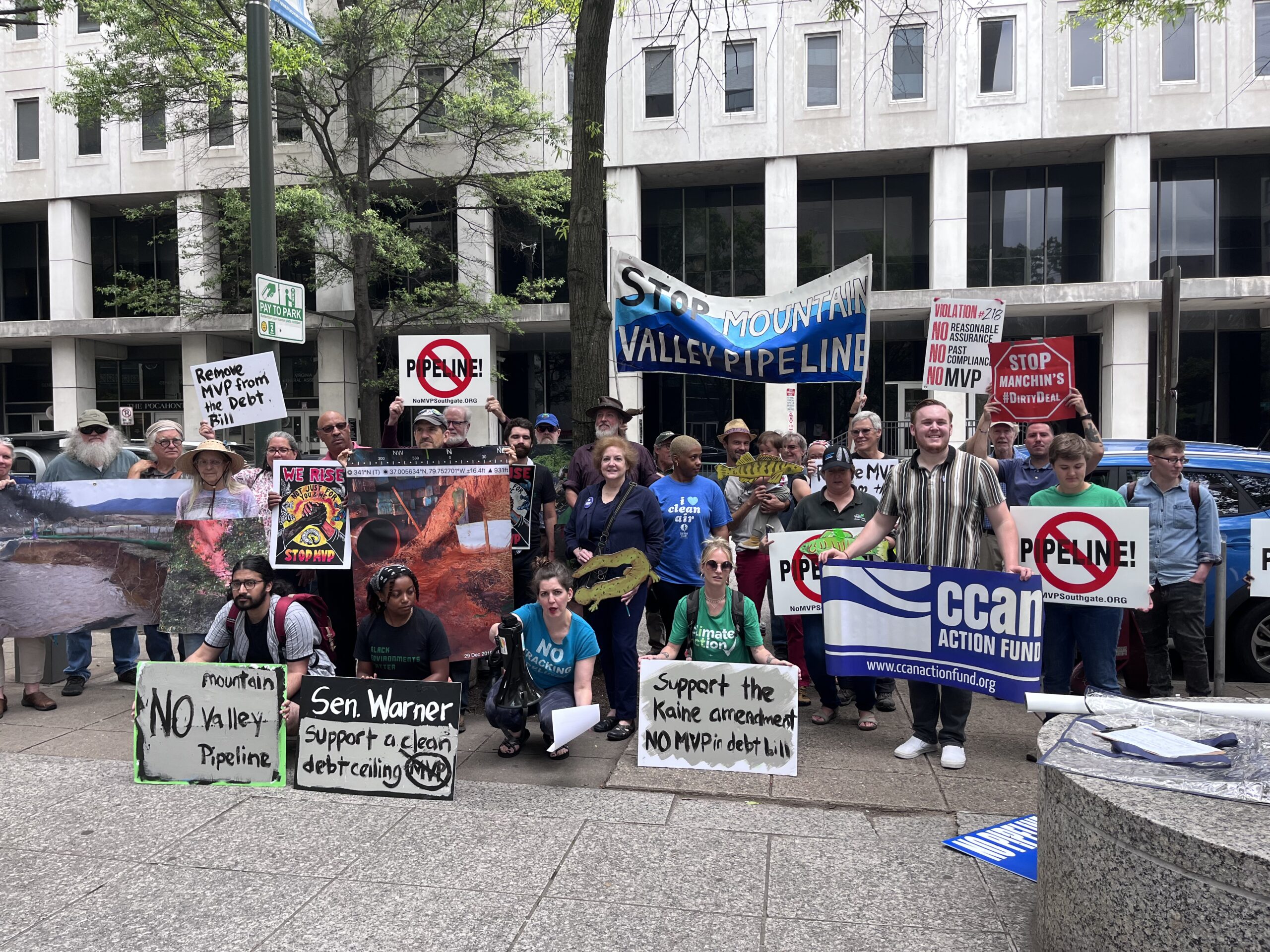
Rally in Richmond to Stop MVP and Manchin’s Dirty Deal June 2023
The denial of the first MVP Southgate extension air permit in 2021 was no accident, it was the result of relentless organizing by Pittsylvania residents and Virginians advocating for healthier communities. Just last month, thousands of Virginians submitted comments to our Federal Energy Regulatory Commission (FERC) opposing the project. In fact, our lawmakers have also recognized MVP’s history of violations and safety issues.
I’ve seen what’s possible when we come together, we’ve stopped pipelines before, and we can do it again! We have the opportunity to speak out and refuse to let our state become a dumping ground for fossil fuel interests. Your comments will help determine if a public hearing is needed and whether this project serves our communities and the public interest.
Join us and submit a comment to the U.S. Army Corps of Engineers, urging them to deny the Section 404 permit for the MVP Southgate extension. You can access our comment guide here.
About the author: Kidest is a communications strategist, storyteller, and environmental justice advocate who brings over six years of experience at the intersection of organizing, narrative change, and digital advocacy. She believes creative storytelling is a powerful tool for advancing grassroots movements, shifting public narratives, and influencing policy decisions.
Based in Richmond, Virginia, Kidest has worked alongside local organizations to amplify marginalized voices and advocate for policies that center the needs of Black communities and other historically excluded groups.